Things to Do in Marseille in August
August weather, activities, events & insider tips
Peak Season · Premium Pricing
August Weather in Marseille
Long-run averages for August
86°F (30°C)
High Temp
66°F (19°C)
Low Temp
1.0 inches (25 mm)
Rainfall
58%
Humidity
3
Rainy Days
7
Sunny-Day UV
⚠ Fire risk in the Calanques massif and surrounding garrigue scrubland is elevated throughout August, leading to frequent trail closures with as little as a few hours notice. Open flames, barbecues, and smoking are prohibited in and near the national park, and the fines are substantial.
⚠ The Mistral wind can arrive with little warning even in August, generating rough seas and making boat excursions uncomfortable or dangerous. Marine forecasts should be checked before any boat trip, and operators will cancel departures in strong Mistral conditions. Build flexibility into your itinerary for rescheduling.
Is August Right for You?
Weigh the advantages and considerations before booking
Advantages
- + August ties July as Marseille's driest month. You get 3 rainy days and 1.0 inches (25 mm) total. Plan outdoors with confidence. The limestone coast keeps hard golden light from roughly 6 AM past 9 PM. That is fifteen hours of usable daylight.
- + The Mediterranean peaks in August. Wade straight in at Plage des Catalans or the Prado beaches. No sharp gasp required. June still demands that. Snorkeling around the Frioul archipelago hits ideal conditions. Dive visibility along the Calanques coast tends to peak now too.
- + Evenings drop to 66°F (19°C). The Vieux-Port quayside becomes an open-air dining room. Grilled loup de mer drifts between tables. Vallon des Auffes fills after dark. Corniche Kennedy terraces do too. August nights carry a looseness the rest of the year never quite matches.
- + Marseille sits close to Provençal wine country. August shows the Cassis and Bandol vineyards at peak photogenic moment. Vines hang heavy and green. Harvest nears. The coastal road to Cassis ranks among southern France's finest drives. Cap Canaille's white cliffs loom 394 m (1,293 ft) above the sea.
Considerations
- − The heat stays real. Midday hits 86°F (30°C). Le Panier's stone streets store warmth into evening. So do the Vieux-Port quays. When the Mistral drops, sometimes for days, the city turns airless. Shade runs patchy in the old centre's narrow lanes.
- − Many independent restaurants, bakeries, and neighbourhood shops close for August congés. Some take two weeks. Others take the full month. Places that stay open skew tourist-facing. Your odds of finding an authentic neighbourhood bistro drop hard. Check ahead. This is not optional if you care about eating well.
- − The préfecture regulates Calanques trail access daily based on fire risk. August means more closures than openings. The garrigue scrub turns tinder-dry by midsummer. Announcements come as late as morning of. If hiking the Calanques is your main reason, pick another month.
Best Activities in August
Top things to do during your visit
Marseille in August settles into a slow, salt-crusted rhythm. Average highs hold steady at 30°C (86°F), and the dry Mediterranean air, the month typically sees only about 25 mm of rainfall, keeps the sky a relentless, cloudless blue from the Corniche Kennedy to the limestone flanks of the Calanques. The mistral wind, when it blows, strips haze from the horizon and sharpens the view across the Vieux-Port to a crystalline edge, the kind of light that flattens shadows and bleaches stone facades to near-white. Nights cool to around 19°C (66°F), warm enough to eat outdoors well past ten without reaching for a jacket. Compared to the spring months, April averages just 19°C, and May's rainfall is half again as much, August is Marseille at its driest and hottest, a city that operates on marine time: early mornings, long midday pauses, and evenings that stretch deep into the night. This is the month when many Marseillais leave the city for family homes in the Var or the Luberon, and the population tilts toward visitors and the locals who stay to run the restaurants, captain the diving boats, and pour rosé at dockside terrasses. The Vieux-Port fish market still operates early mornings, the tang of brine and diesel mixing with the smell of rascasse laid out on crushed ice. The beaches along the Corniche and the Prado fill before nine. By noon, the sand at Catalans beach radiates enough stored heat to sting bare feet. Evening brings relief in small increments: the stone quays release the day's warmth slowly, and the air carries charcoal smoke from grilled sardines and the sharp anise edge of pastis poured over ice at corner bars along the Quai de Rive Neuve. For visitors weighing where to stay, the area around the Vieux-Port puts most attractions, ferry terminals, and restaurants within walking distance. The neighbourhood around Cours Julien, ten minutes uphill, trades harbour views for street art, independent bistros, and a younger local crowd. Marseille's food culture in August centres on the sea, bouillabaisse served at establishments that follow the Charte de la Bouillabaisse, pan bagnat eaten on rocky beaches in the Calanques, and the day's catch grilled whole at portside restaurants where the fish was swimming that morning. The city is safe and walkable in its tourist quarters, Vieux-Port, Le Panier, the Corniche, Endoume, with the same basic urban awareness you would exercise in any major European port city. At night, the bars along Cours Honoré d'Estienne d'Orves stay open late, and the rooftop terrasses above the old harbour catch a breeze that the streets below do not.

Full-day Wine Tour around Bandol & Cassis from Marseille
foodThis full-day excursion drives east and south from Marseille into the appellations of Bandol and Cassis, where vines grow on terraced hillsides that drop toward the Mediterranean. August ripens Mourvèdre grapes to a deep, inky concentration in Bandol's sun-baked clay soils, and the rosés of Cassis, dry, mineral, faintly saline, taste sharper when sipped in a cellar carved into limestone, cool air pressing against your skin while the heat outside hammers the vineyard rows. The route threads through the coastal road above the Calanques, where the turquoise water below looks almost artificially saturated against white cliff faces.
Bandol and Cassis produce wines shaped by the same Mediterranean sun and mistral wind that define Marseille itself, and tasting them at the source, with the sea visible from the vineyard, is an experience no wine bar replicates.
Insider tip: Request that the tour stop at a domaine in Bandol that produces reds as well as rosé, most visitors default to the pink, but Bandol's Mourvèdre-based reds are among the most age-worthy in Provence and are rarely exported.
This month: August is the final stretch before harvest begins in many Bandol vineyards, the fruit hangs heavy and dark on the vine, and winemakers are often willing to discuss the approaching vintage in detail.

Châteauneuf du Pape Wine Private Tasting Tour From Marseille
guided_experienceThe drive north from Marseille to Châteauneuf-du-Pape crosses the full spectrum of Provençal landscape: the urban fringe gives way to garrigue scrubland fragrant with rosemary and wild thyme, then the flat Rhône Valley opens up, its vineyards planted in the famous galets roulés, large, smooth river stones that hold the day's heat and radiate it back to the vines through the night. A private tasting at a Châteauneuf-du-Pape estate means encountering Grenache-dominant blends of real depth, wines that carry aromas of dried herbs, black olive tapenade, and sun-warmed stone. The village itself sits on a hill crowned by the ruined papal castle, and from its walls the view sweeps across kilometres of vines stretching toward the Dentelles de Montmirail.
Châteauneuf-du-Pape is one of France's most storied appellations, and a private tour means tasting directly with the producer, no crowds, no rushed pours, and access to cuvées you cannot find outside the cellar door.
Insider tip: Ask the guide to include a stop at a domaine that still uses large traditional foudre barrels rather than small oak barriques, the wines taste more transparently of the terroir and less of the wood, which is the whole point of being here.

Diving in Authentic Marseille with a local
otherMarseille sits on some of the clearest coastal water in the western Mediterranean, and August delivers peak underwater visibility, minimal rainfall and calm seas mean sightlines can extend well beyond twenty metres through blue-green water. A local guide takes divers along the rocky coastline near the Calanques, where the seafloor drops away from sheer limestone walls into meadows of Posidonia seagrass that sway in the current like slow-motion prairie. Expect to see mérous, groupers, sheltering under overhangs, octopus tucked into crevices with only a watchful eye visible, and, if the guide knows the spots, the encrusted remains of amphorae from Marseille's ancient Greek trading past scattered across the sandy bottom.
Diving from Marseille's coastline puts you inside a protected marine park where the underwater landscape, sheer white cliffs, sea caves, shipwreck debris spanning centuries, mirrors the drama of the Calanques above the surface.
Insider tip: Book the earliest morning slot. The water is calmest before the afternoon thermal wind picks up, and the low-angle light penetrating the shallows produces the best conditions for underwater photography.
This month: August water temperatures around Marseille reach their annual peak, making extended dives comfortable in a standard 5mm wetsuit without the chill that limits bottom time in spring.

Private Tour Perched Villages of Luberon & (LAVENDER JUNE/JULY)
private_tourThe Luberon's perched villages, Gordes, Roussillon, Bonnieux, Lourmarin, cling to hilltops above the Durance valley, their honey-coloured stone walls radiating stored heat in the late afternoon like slow-cooling ovens. A private tour from Marseille covers roughly ninety minutes of driving each way. But the reward is a landscape that feels centuries removed from the port city: narrow lanes smelling of baked stone and dried wild herbs, shuttered houses with faded blue-grey paint, and panoramic views across orchards and vineyard rows. In Roussillon, the ochre quarries blaze in shades of burnt orange and deep rust, the pigment stains everything: the cliffs, the footpaths, the soles of your shoes.
The Luberon's perched villages represent a Provence that existed long before tourism arrived, fortified, self-contained, and built with the landscape rather than imposed on it.
Insider tip: Ask the driver to stop in Lourmarin for lunch rather than the more touristed Gordes, the restaurants in Lourmarin are locally favoured, the village is quieter, and Albert Camus is buried in its cemetery if you want a contemplative detour.
This month: The lavender fields referenced in this tour's name bloom in June and July. By August, most fields have been harvested, so the purple expanses will not be visible. The perched villages themselves are equally compelling without lavender, the ochre cliffs, stone architecture, and Luberon landscape do not depend on the bloom.

Catamaran cruise in the Frioul Archipelago in Marseille
cruiseThe Frioul Archipelago, Pomègues, Ratonneau, and the infamous Château d'If, sits less than thirty minutes by catamaran from Marseille's Vieux-Port, but the crossing feels like a clean break: the harbour's diesel-and-fish-market smell fades, replaced by open-water salt air, and the city's skyline shrinks to a silhouette against the Marseilleveyre massif. The catamaran's shallow draft allows it to nose into calanques too tight for larger vessels, anchoring in coves where the water shifts from deep navy to transparent pale green over a white sand bottom. Swimming off the stern in August, the Mediterranean is at its warmest, almost bathwater, and the bare limestone islands reflect sunlight so intensely that everything takes on a bleached, overexposed quality.
The Frioul islands offer Marseille's coastline at its most elemental, raw limestone, transparent water, zero development, and reaching them by catamaran means you bypass the crowded public ferry.
Insider tip: Bring water shoes and sun protection you trust. The rocks at the swimming stops are sharp enough to cut, and the August sun on open water is punishing, with no natural shade on the islands beyond what you create yourself.
This month: August seas around the Frioul Archipelago are typically the calmest of the year, reducing the chance of a cancelled departure due to strong mistral conditions.

Private Full Day Wine Tour in Provence From Marseille cruise port
foodDesigned for cruise passengers docking at Marseille's port terminal, this private wine tour collects you at the quay and drives directly into the Provençal countryside, bypassing the city entirely in favour of vineyards. The route covers appellations that may include Côtes de Provence, Coteaux d'Aix-en-Provence, or the rare and tiny Palette, winding through landscapes of scrubby garrigue, silvery olive groves, and vineyard rows whose soil crunches underfoot with dried limestone gravel. Inside the tasting rooms, converted mas farmhouses or modern cellars with thick stone walls, the air carries a damp, yeasty coolness that contrasts sharply with the searing white heat outside, and the wines themselves taste of that contrast: cold rosé with a chalky mineral finish, or a Palette red that smells of iron and dried garrigue herbs.
For anyone arriving by ship with limited hours in port, this tour converts a brief stop in Marseille into a genuine Provençal wine education, with private estate access that no walk-in visitor receives.
Insider tip: Tell the guide upfront if you prefer whites and reds over rosé, Provence excels at all three. But most default itineraries lean heavily on pink, and the reds from appellations like Palette and Bandol are far more complex and less widely known.
This month: August is peak cruise season at Marseille's port, so securing a specific date requires booking well ahead of your sailing.
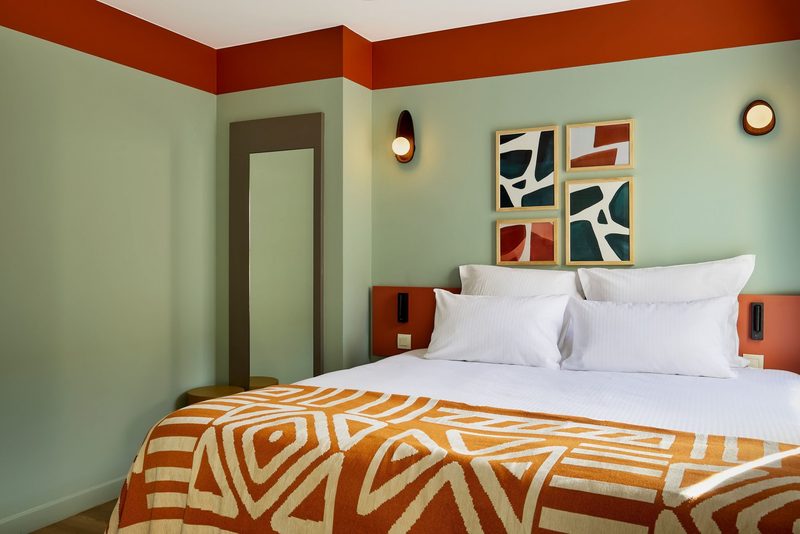
Where to Stay in Marseille in August
Hand-picked hotels across price tiers for August travellers.
Public Holidays in August
Dates that affect opening hours, transport and crowds
Assomption
Known in English as Assumption Day. Observed nationwide as a public holiday.
Assomption
Known in English as Assumption Day. Observed nationwide as a public holiday.
Packing Checklist
Bookmark this page — your progress is saved between visits
Need the full list with shopping links?
Climate-specific gear, brand recommendations, and what to leave at home.
View Marseille Packing List →Essential Tips
Insider knowledge and common pitfalls to avoid
Insider Knowledge
August brings the annual fermeture to France. Marseille feels it harder than visitors expect. Roughly a third of independent restaurants, bakeries, and neighbourhood shops close for two to four weeks of congés annuels. Often just a handwritten sign announces this. Open places skew tourist-facing. Dining options narrow. Check social media before committing to a specific meal. It is the fastest confirmation. The Marché des Capucins and Vieux-Port fish market stay open through August. Markets remain your fallback for authentic Marseille food.
Marseille has a complicated relationship with its reputation. The honest answer for August visitors: tourist areas, the Vieux-Port, Le Panier, the Corniche, and the Calanques coast stay broadly safe by day and well into evening. Exercise standard big-city caution. Pickpockets work crowds and the metro. Avoid neighbourhoods north of Gare Saint-Charles at night if you do not know them. Locals advise keeping phones hidden on Metro Line 1. Carry your bag on the inside shoulder through Le Panier. This is sensible advice. Follow it.
The Mistral wind is Marseille's secret weapon and its occasional curse. This cold, dry northwesterly funnels down the Rhône valley and hits the coast hard, sometimes gusting above 90 km/h (56 mph). It strips humidity from the air. The sky turns depthless, almost violent blue. In August, a Mistral episode typically lasts two to four days and makes boat trips uncomfortable or impossible while dropping the perceived temperature and clearing the haze that otherwise builds up over the port. Check the marine forecast before booking a boat excursion. If the Mistral is blowing, reschedule. Use the wind day for the hilltop walk to Notre-Dame de la Garde, where the air will be crystalline and the views will extend to the Alpilles. If the wind is too fierce even for walking, the MuCEM, the striking concrete-and-lattice museum at the entrance to the Vieux-Port, houses excellent rotating exhibitions on Mediterranean culture and is worth half a day. La Vieille Charité, a seventeenth-century almshouse in Le Panier with a domed chapel at its centre, holds the city's archaeology and African arts collections and is usually quiet enough in August that you can hear your own footsteps on the stone floors.
The best bouillabaisse in Marseille follows the Charte de la Bouillabaisse, a protocol established in 1980 by local restaurateurs who were tired of seeing the dish debased into fish-flavoured tomato soup. The charter specifies a minimum of four species of rock fish, no frozen fish, a saffron-coloured broth served first with croutons and rouille (a peppery, garlicky spread with enough kick to clear your sinuses), and the fish presented whole on a separate platter. Restaurants that adhere to the charter typically display a small sign or plaque near the entrance. Ordering it is a commitment. It is a splurge at any place that does it properly. It feeds at least two. It takes time. The fish stew you will be offered at cheaper portside spots is not bouillabaisse, it is soupe de poissons, which is a fine dish in its own right but a different thing entirely.
Avoid These Mistakes
Assuming you can hike the Calanques in August. The trails through the Calanques National Park massif are regulated daily by a préfectoral fire-risk assessment, and in August they are closed more days than they are open. Visitors who build their entire trip around a Calanques hike frequently arrive to find the trails locked and no backup plan in place. Check the access status the morning of. The park publishes a daily colour-coded map online. Have a boat-based alternative ready before you leave your accommodation.
Spending all your time at the Vieux-Port and never venturing beyond it. The port is the geographic and emotional heart of the city, but Marseille's most interesting corners, Cours Julien with its street art and packed cafe terraces, the Friche la Belle de Mai arts complex in a converted tobacco factory, the quiet residential streets of Endoume climbing toward the Corniche, all require you to leave the waterfront. The metro and tram system is functional and affordable. Use it.
Underestimating the distances along the coast. The walk from the Vieux-Port to the Prado beaches is roughly 5 km (3.1 miles) along the Corniche Kennedy, and in 86°F (30°C) heat with no shade for long stretches, that is a much harder walk than it looks on a map. The same applies to the coastal path beyond the Prado toward the Calanques trailheads at Callelongue, another 7 km (4.3 miles) with significant elevation. Take the bus for the outbound leg. Walk back in the cooler late afternoon. Do not try the full distance under the midday sun.
Ready to plan your trip to Marseille?
Now that you've got the research covered, here's where to go next.
Explore More Activities in Marseille
Didn't see anything interesting yet?
Browse Viator's full catalog of tours, day trips, food experiences, and private guides in Marseille.
See All Marseille Tours on Viator